
Left Holding the Bag
You can't and shouldn't shove everything in your pockets. Thankfully, we have options.

Faithful readers may or may not know that I’m between jobs right now. It’s not been all bad: in the past month since my layoff I’ve been able to work on creative projects, sail more than any summer in the past, and lie in my hammock with a good (or bad) book. I’ve also been given the opportunity to reassess my identity where it intersects with my work routine. Part of this self-review will hinge on what my next job looks like. What will workplace culture be? What will the dress code be like, will some of my more workwear-heavy looks be acceptable to the higher-ups in the new workplace? And - assuming the job is in-person - how am I going to carry all my stuff to work?
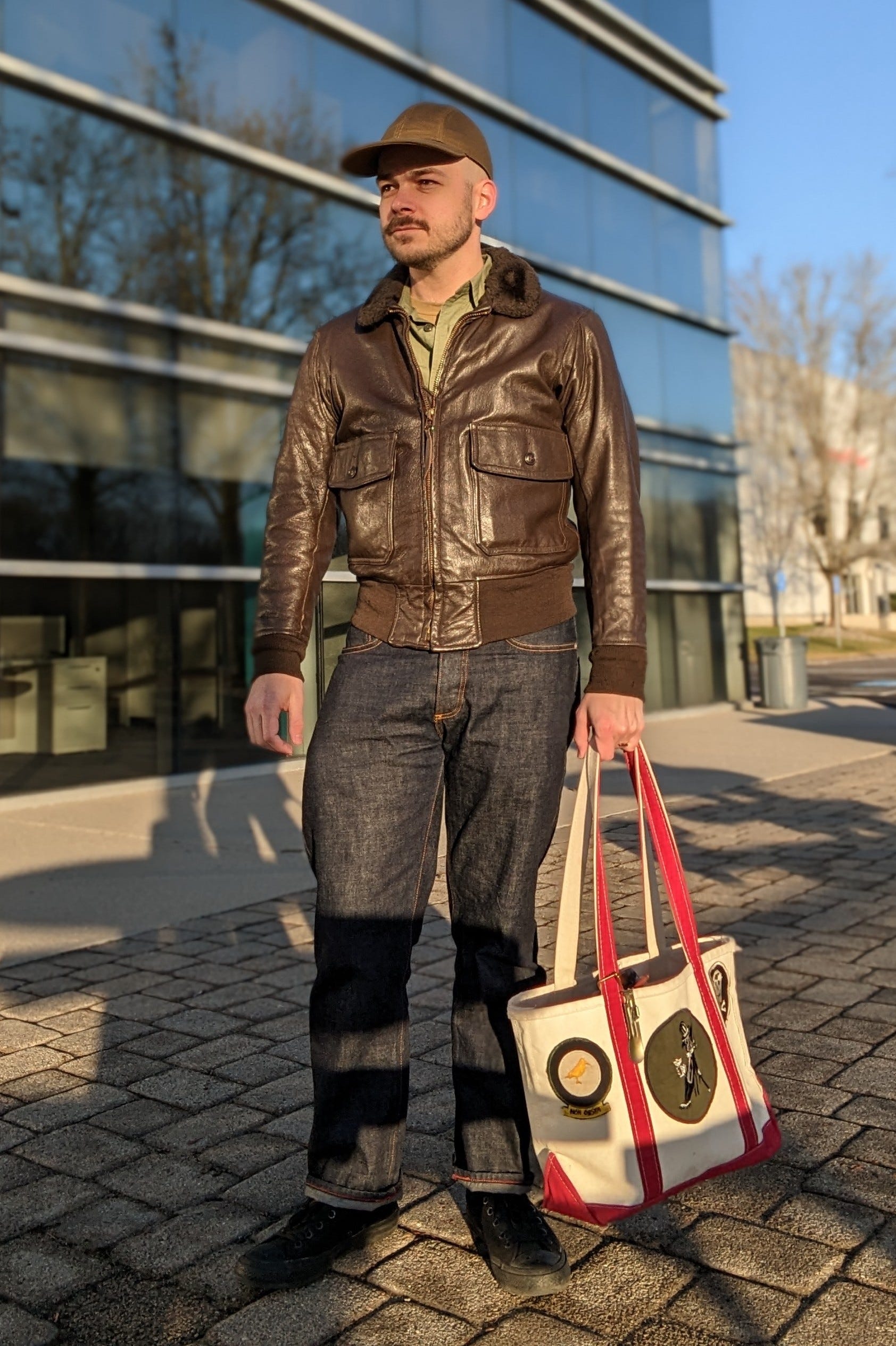
Don’t get me wrong, I like having and using my pockets. One of the many great things about sport coats and suits is the number of pockets you have at your disposal, and jacket pockets are more comfortable and practical for holding my EDC than trouser pockets. On the other hand, there are plenty of things that won’t fit in the pockets of a suit or a sport coat or a parka or a field jacket, especially if you’re going to be out of the house for the whole day. A novel, a camera, your lunch or laptop all need to be carried somewhere. I grew up in the days of men being called “metrosexual” and being terrified of the accusation that they were carrying a “man purse,” but those anti-man-bag days seem to be fully in the rearview mirror. With every third man on the street wearing a fanny pack, it seems like the ludicrous stigma of the bag is over and done with, and in that spirit I’m taking stock of the bag options I have for going back to work.
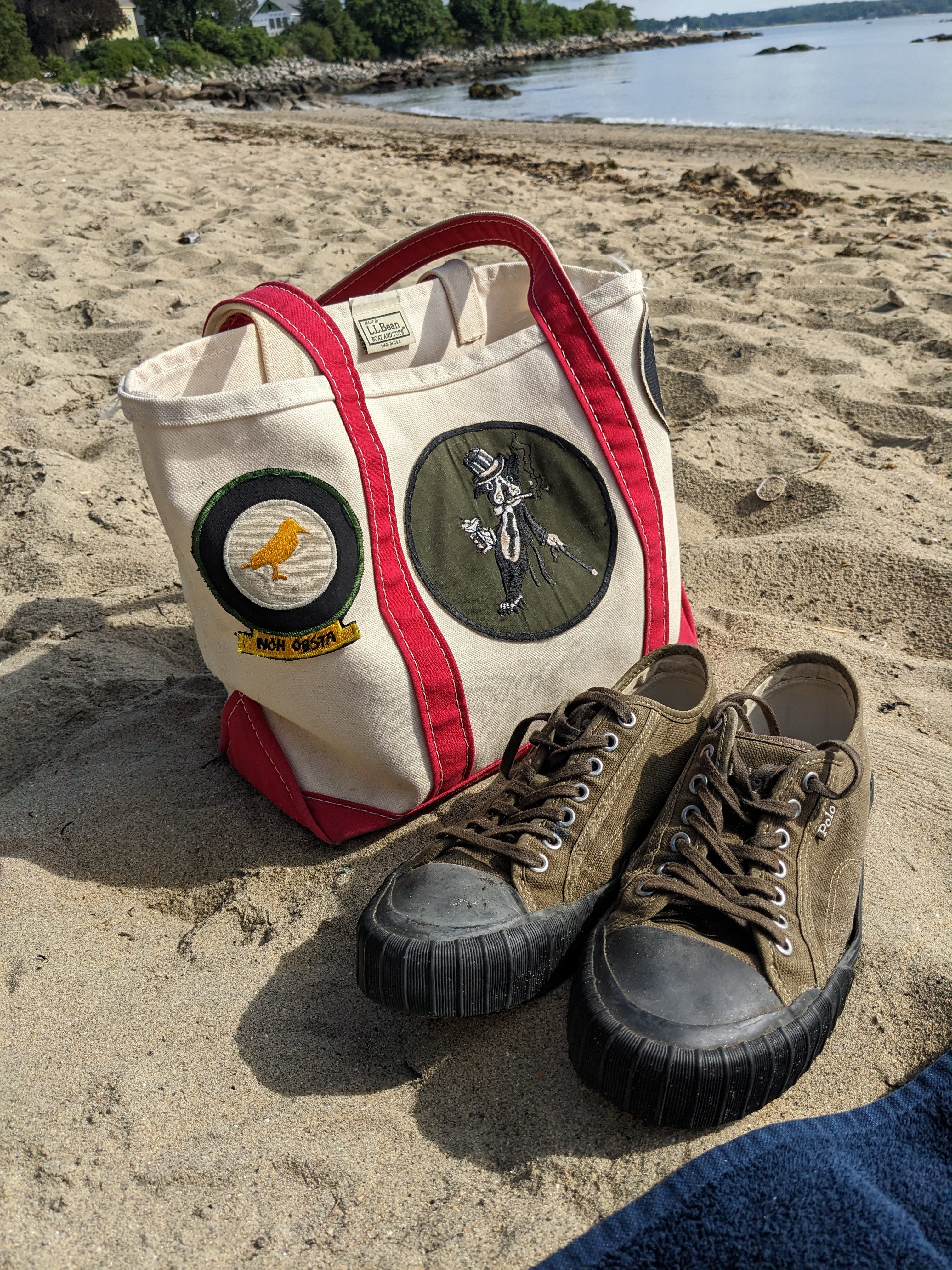
For the last long while, my go-to daily bag has been the classic L.L. Bean Boat and Tote. Created in 1944 in the pre-refrigeration days of iceboxes, it was made to carry blocks of ice home from the ice company to keep your food cold. Made from 500-pound-test cotton canvas, these bags are a classic for a reason, and will stand up to daily use for decades. The natural canvas and colored cotton trim wear and patina handsomely over time, to the point where vintage Bean Bags are selling for multiple hundreds of dollars to people who want that “my family summers on the Cape” look without putting in the years of dragging their bag on and off boats and throwing it in the back of their granddad’s Land Rover.
My Bean Bag is the classic 17 liter Medium size with the long handle option, easy to carry by hand or sling over the shoulder, and not too large for commuting on the train. It was a piece of merch given to me by a university that I worked for, and when I left that job I started sewing patches to it to cover the university seal. It has been my daily use bag for around seven years, and the trim is fading and fraying nicely. It’s marked by scuffs and wear from the streets of Boston and the beaches of the North Shore, and sports an arrabbiata sauce stain in the bottom from a poorly secured batch of leftovers. The classic Bean open-top design is bombproof, with no zippers, buckles, or latches as potential points of failure. The main downside is lack of protection for the contents during bad weather.
When I began interviewing for jobs again last year, I realized that my battered and customized Boat and Tote, as beloved as it is, was not ideal for visiting with a potential employer. Part of the interview process is dialing back your individuality - how you dress, how you present yourself - in order to be inoffensive and acceptable to the talent acquisition team that you have to sell yourself to. Wanting to carry at least a book and a camera with me on my train trips into the city for interviews, I realized that my Bean tote was not an ideally professional accessory for those trips.
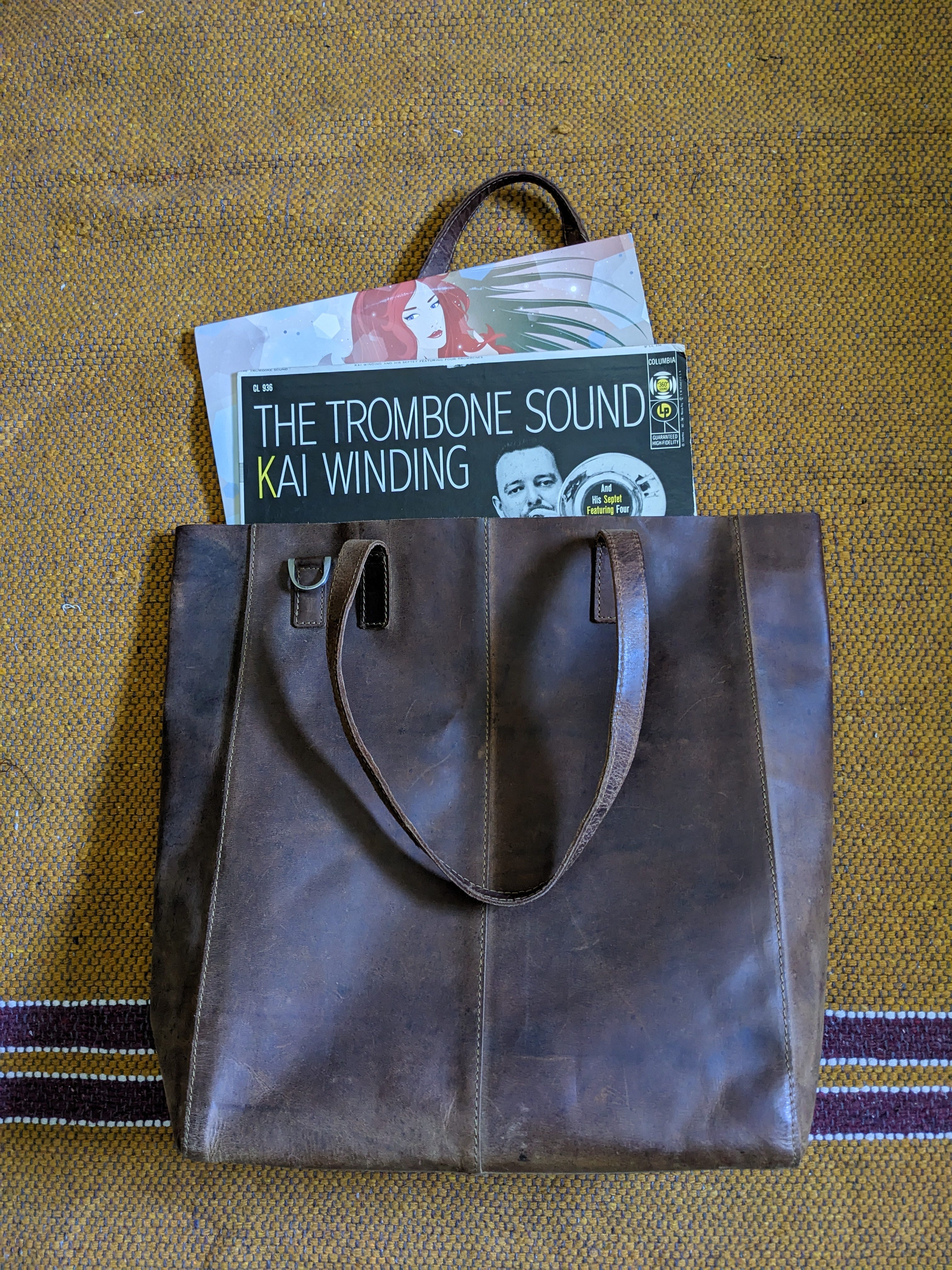
Luckily, after a little time scoping out vintage options on eBay, I happened to go to the Renaissance Faire and wandered into a stall belonging to Earthbound Leather. Among the journals and belts and straps for carrying potions and whatnot, I found a simple rectangular leather tote bag.
My leather tote has roughly the same volume as the Bean tote, but in a deeper and narrower shape. I don’t know if this was in the mind of the maker when they put it together, but the narrow bottom and high sides make it ideal for carrying records in, which I’ve taken advantages of in my periodic raids on nearby record stores and vintage markets. It’s also ideal for large notebooks, paperback novels, and folios for note-taking during an interview or a business meeting. It is not, however, quite wide enough to easily hold bulkier lunches or larger SLR cameras, but it does have a detachable shoulder strap which I took advantage of when I used it as my carryon for a trip this winter. Moving forward, this tote is going to be my standby for in-person interviews and might earn a place as my daily work bag in the future.
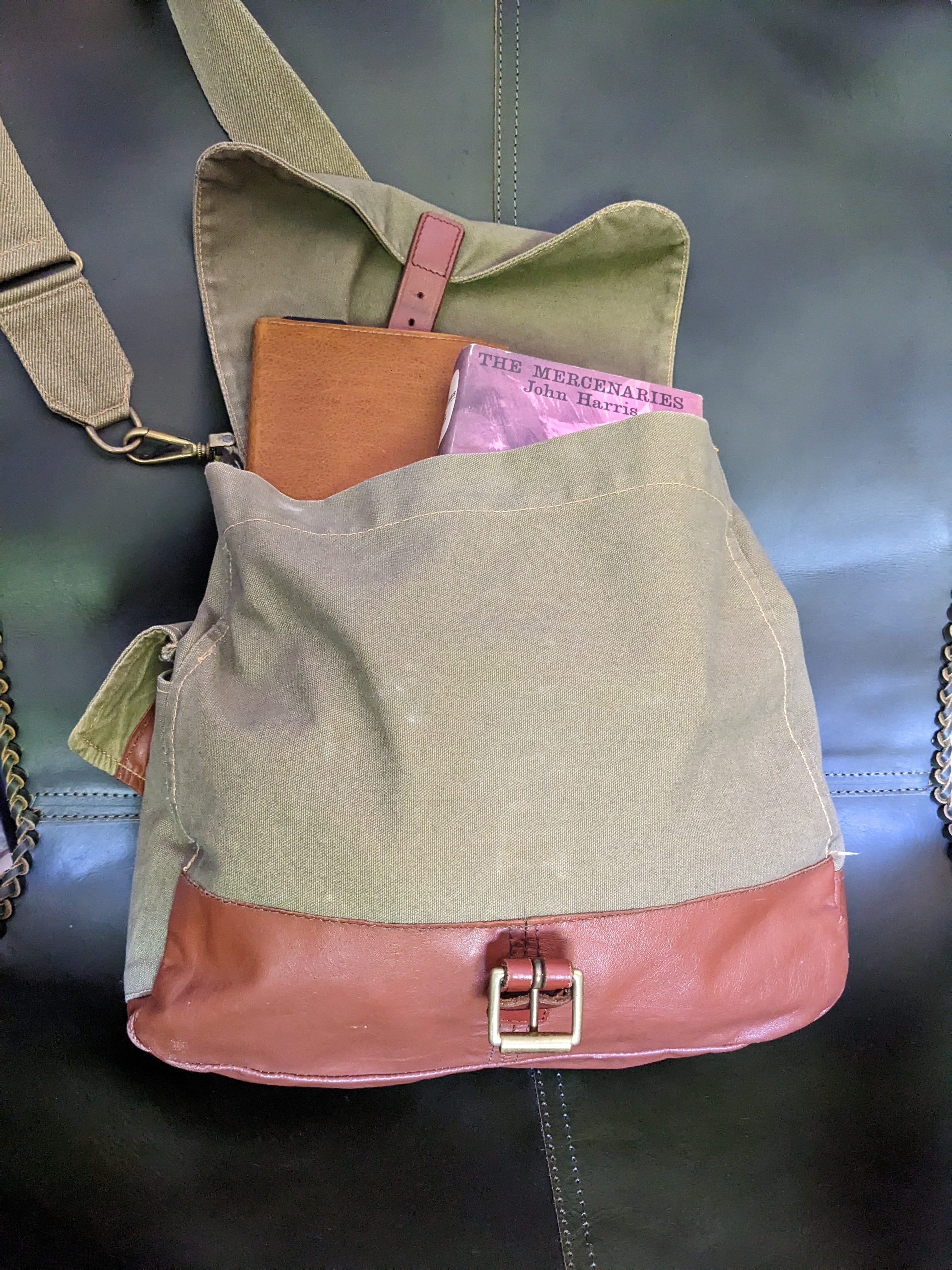
The oldest and smallest of my bags is in a different form factor, a soft canvas bag with a flap closure and messenger-style shoulder strap. Made by military reproduction manufacturer What Price Glory, it’s a representation of the private-purchase musette bags carried by British and American officers during the First World War. Derived from the soft, flap-topped canvas bags carried by French workers and sportsmen, musette bags were designed to be clipped to officer’s gunbelts or carried cross-body the way I carry mine. They would hold personal gear like a diary, tobacco, a change of socks, and maybe a bottle of brandy liberated from an estaminet behind the lines. With a large main pocket and smaller sub-pockets inside and outside, mine has worked exceedingly well as a daily carry bag and light-duty carryon.
I bought it during my first long-term office job *mumblemumble* years ago, when I was making lengthy commutes across the city on foot and public transport. The cross-body strap was particularly useful in those conditions, allowing me to keep my hands free and to swing the bag in front of me on crowded subway trains. Over time the canvas has faded and patinaed, washing out attractively, and the only issue I’ve had with it is the spring on one of the strap clasps. I certainly haven’t babied my bag, but the leather (what appears to be cowhide for the buckle straps and goatskin for the trim) has not split or been punctured during years of careless carry. I eventually phased it out from daily use as I began wearing more tailored jackets to work, moving to hand-carried bags which wouldn’t rumple my suits. These days my musette bag is more likely to see service when I’m traveling, as a small carryon or a handy bag for strolling around a new city.

Changing circumstances offer opportunities to reinvent yourself. When I go back to work, will I be the kind of guy who carries a leather tote bag, its creases and scuffs telling the story of my journeys? What will make sense with my clothing, with my commute, and with the culture of my workplace? We talk a lot about “finding your style,” but “personal style” changes over time no matter how much you think you have it dialed in, and the accessories you carry change with it. What are you carrying your stuff in every day, and do you think you’ll be using the same thing a year from now?
What I’m Watching: Kids on the Slope
I’ve just started watching the ten-part anime series Kids on the Slope, directed by Shinichiro Watanabe with music by Yoko Kanno, the team behind the legendary series Cowboy Bebop. Starting in 1966, Kids on the Slope is a coming of age story that depicts the friendship between a new arrival to the high school in Sasebo and a local delinquent who he meets on his first day. Their shared interest in jazz draws them together over the next three years, and they form a band that rehearses in the record shop owned by a classmate’s family.
Adapted from a manga by Yuki Kodama, each episode is named for a famous jazz number like “Moanin’” or “All Blues.” Much more slow-moving and grounded than Cowboy Bebop, the series has been praised as a celebration of music and art, and has brought back memories of my own younger days playing jazz. I look forward to seeing how the series develops as I finish it.