Surfing and Corduroy
He's back on the short shorts again

Corduroy is the quintessential fall/winter fabric, with a thick, plush hand and a structure that stands up to biting winds and hard labor. We may associate corduroy today with dusty professors or English gentry lounging by the fire, but it was primarily used as a hard-wearing layer for outdoor pursuits like farming, hunting, and laboring. The traditional uniform of the central-European journeyman carpenter is a jacket and trousers made of black corduroy: easy to launder, warm enough to protect against the elements, and tough enough to resist wear from long days on the road or learning your trade. But corduroy isn’t limited to the cold months of Northern Europe. It’s also been used in a garment that became a symbol of a classically tropical sport.
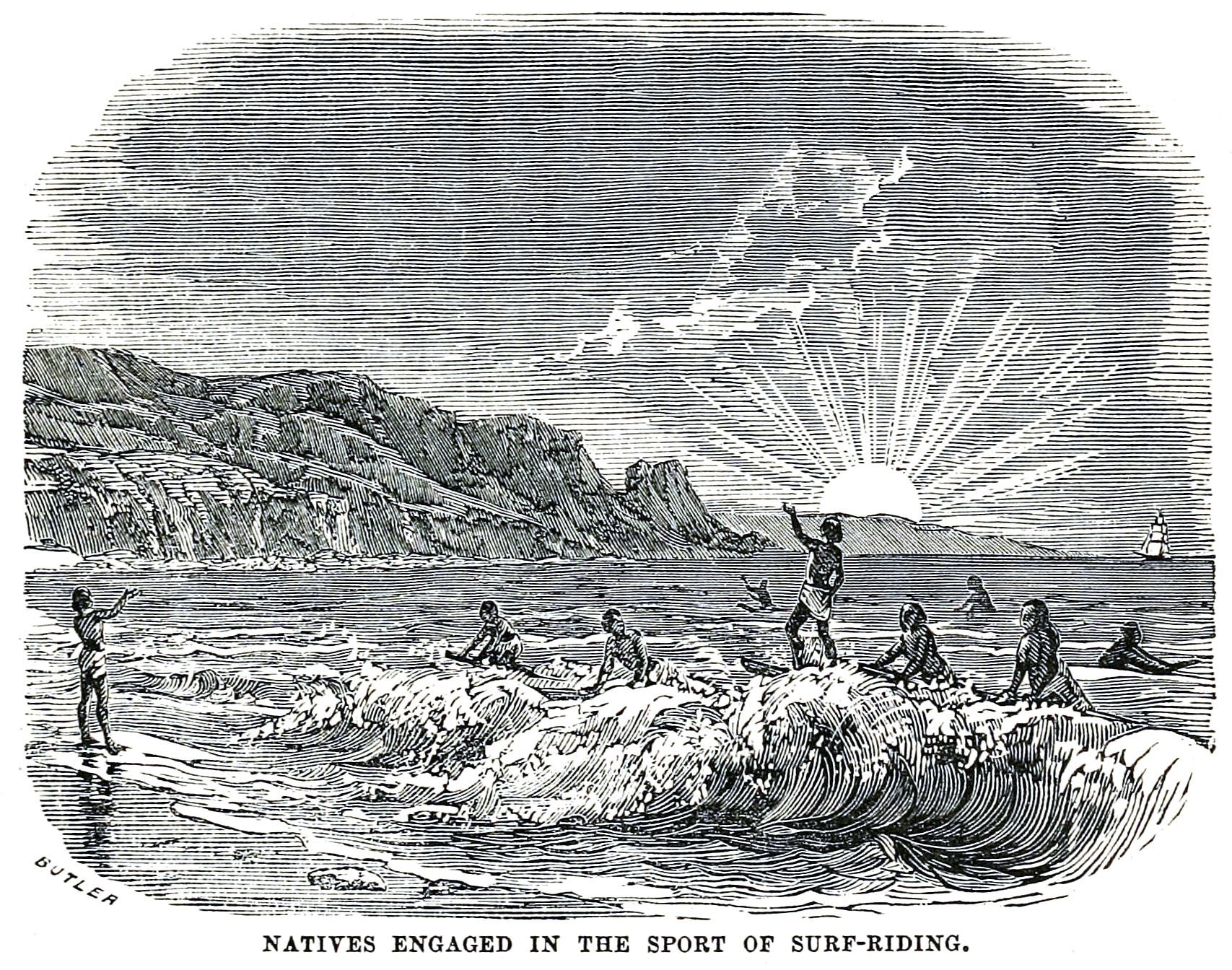
Activities recognizable as surfing were developed independently in Polynesia, Peru, and West Africa, where practitioners would ride in to shore using the power of the waves, atop shallow canoes, rafts made of reeds, single planks of wood, or carefully-shaped oblong boards. Modern standing-up surfing appears to have developed in Hawai’i by settlers from Tahiti and the Marquesas, who brought their traditional customs of body-boarding when they began to arrive in the Hawaiian Islands around AD 400. Surfing was heavily proscribed in Hawai’i for much of the 19th Century because it was deemed immodest by Christian missionaries and the Christian converts in the Hawaiian royal family, but was re-popularized under the reign of King David Kalākaua. Taking the throne in 1874, Kalākaua made a priority of revitalizing traditional Hawaiian cultural practices like Hula, Mele chants, the martial art of Lua, and surfing. His reign, during which musicologists and native practitioners preserved and renewed Hawaiian culture, is now considered the First Hawaiian Renaissance.
During Kalākaua’s reign, from 1874 to his death in 1891, surfing became a symbol of the Pacific tropics to visitors from North America and Europe, and it began to spread. Writers like Mark Twain, Jack London, and Agatha Christie all tried surfing during visits to Hawai’i. The first surfers in California appear to have been three teenage Hawaiian princes who were studying at a boarding school in San Mateo. After shaping their own boards, they surfed the break at the mouth of the San Lorenzo River. In 1907, George Freeth visited California to demonstrate surfing and settled there, conducting surfing exhibitions all along Southern California. In 1909, surfing made it to the East Coast in my native North Carolina, making Wrightsville Beach one of the first surfing spots on the Atlantic Ocean.
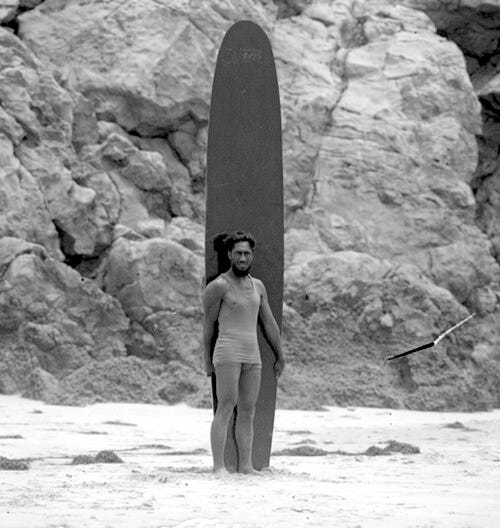
Duke Kahanamoku, a native of Honolulu and a five-time Olympic medalist swimmer, started his athletic career working as a “beach boy,” a member of a loosely organized, largely native group of surfers who made good money teaching tourists to surf on Waikiki. After competing in three Olympic Games from 1912-1924, Kahanamoku spent his post-Olympic years giving surf demonstrations around the world, particularly in Australia and Southern California, which became the two primary surfing meccas outside of Hawai’i. After the Second World War, with the success of narrative films like Gidget and documentaries like The Endless Summer, surfing became a national obsession, with amateurs swarming to previously deserted breaks all from Santa Barbara to Sonoma and beyond. While Hawai’i was the cradle of modern surfing, for continental Americans, California was the place to be.
So what does all this surfing history, fascinating as it is, have to do with corduroy? Well California, as famously balmy as it can be, especially in the south, is less warm than Polynesia. Anyone who has spent a day at the beach, and particularly anyone who’s stuck around after sundown, can tell you that in North America you’re going to want a warm layer to wear when a chill comes off the water. In films like Gidget you can see characters wearing hoodies, cotton windbreakers, and button-down shirts with the sleeves ripped off. Pendleton overshirts were popular among surfers in the 60s, which is why the Beach Boys first billed themselves as the Pendletones, dressing in identical plaid wool shirts. Corduroy, a hard-wearing workwear material used for laborer’s jackets, was also a common choice for beach cover-ups.
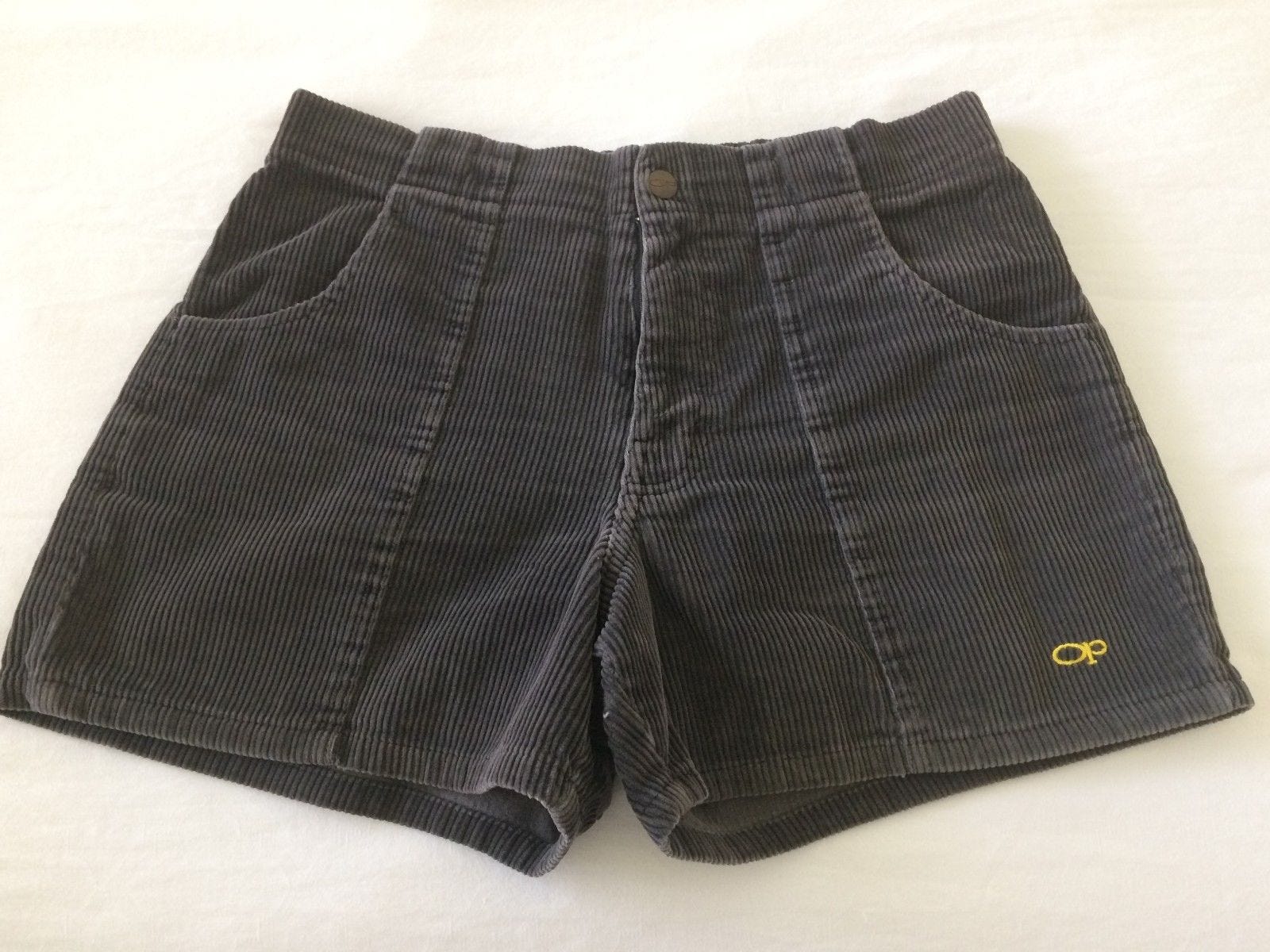
In 1973, San Diego-based surfboard maker Jim Jenks launched his brand of surfwear called Ocean Pacific. Among his first offerings was a line of fairly short corduroy “walkshorts,” with fatigue-style patch pockets and the brand’s initials, “OP” monogrammed near the hem on the left thigh. Ocean Pacific almost certainly did not invent this style of shorts, and they weren’t the only ones to make them, but their choice to pivot to a mass market rather than selling primarily through specialty surf shops like their competitors Billabong and Quicksilver resulted in their success as the general public’s surf clothing purveyor and the enduring association between the brand and the shorts themselves. By selling through department stores and shopping malls, OP shorts, or at least OP-style shorts, became part of the surfer’s uniform during the 70s and 80s.
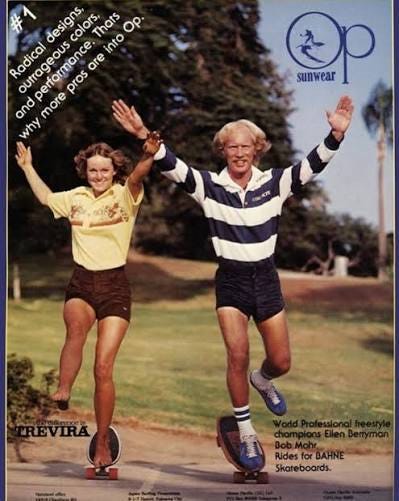
I have a couple pairs of OP-style shorts. In comparison to the other classic short-shorts design, the UDT short, OP’s are a bit more practical for day-to-day use. Their slightly-longer inseam is a bit less alarming than the extremely brief UDT, making them more universally acceptable and easier for the timid to wear. And where UDT’s generally have just a single pocket on the right rear side, OP-style designs have deep patch front pockets as well. These days, when the minimum EDC tends to be keys, wallet, phone, the extra pocket space and the slight stretch of the cotton-blend corduroy is handy for packing the necessities if you don’t have a bag to put them in.
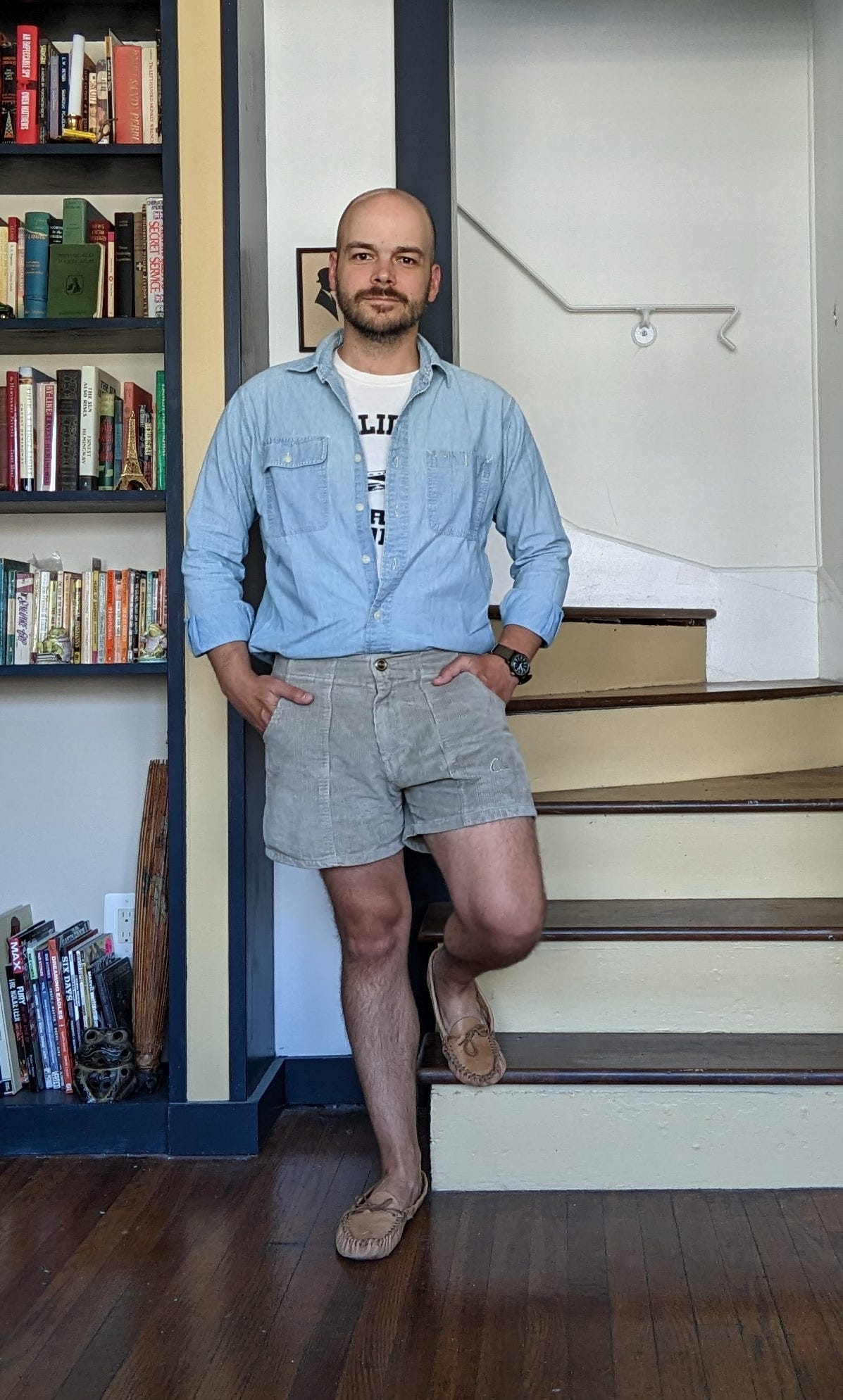
Ocean Pacific, having suffered financial difficulties and acquisition in the 90s, seems to just be selling tees, sweatshirts, and mugs that trade on their eye-catching graphics from previous decades, with no walkshorts in sight, but the style is far from lost. Modern manufacturers of OP-style shorts include Quaker Marine, Birdwell’s, and for particularly short vintage-style inseams, Hammies. As usual, I’ll also recommend shopping vintage, where a quick search for “corduroy shorts” will likely put you well on your way to your first pair.
What I’m doing: Look, You May Have Guessed That I Started Surfing
A trip to Hawai’i this winter, a new interest in Polynesian culture and history, the film Point Break, and my partner’s wish since childhood to learn to surf have all led to me taking surfing lessons this summer. New England may not be considered a surfing mecca like SoCal or Bondi, but there are some nice wide, sandy beaches not far from me that are ideal for learning to surf. I don’t have any photos of me actually surfing but rest assured that I am okay at it.

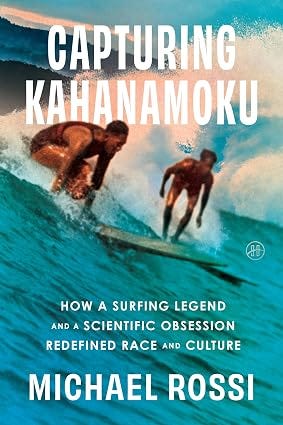
I would also like to recommend the book Capturing Kahanamoku by Michael Rossi. The book serves as half biography of Duke Kahanamoku, one of the fathers of modern surfing, and half an examination of the state of eugenics in the early 20th century, and how many devotees of the pseudoscience viewed Hawai’i and the Hawaiian people.